
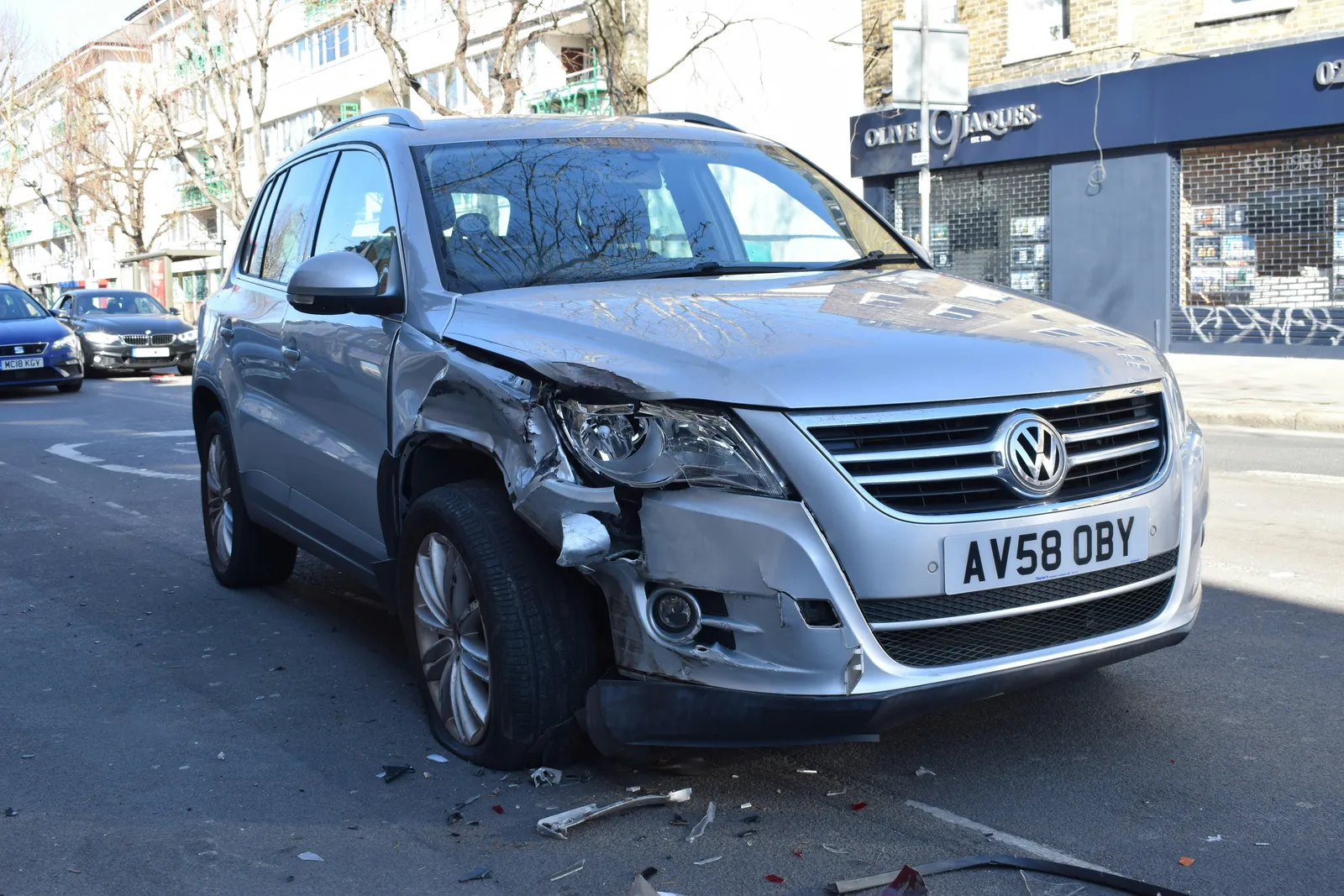
Real accidents are often messy. One driver may have been speeding while another made an unsafe turn. A property owner may have allowed a dangerous condition to remain while a visitor was also looking at a phone. Several contractors may share control over a worksite. When more than one person's conduct contributes to an injury, the legal system needs a way to allocate responsibility. In New York, that analysis is generally described as comparative fault or comparative negligence.
For many years, a simple description of New York law was that a claimant could recover even when substantially at fault, with the award reduced by the claimant's percentage of responsibility. That description is no longer complete. In 2026, CPLR § 1411 was amended to add a special rule for personal injury actions subject to Insurance Law Article 51, the no-fault motor-vehicle framework. Outside that carveout, the statute still follows the traditional proportional-reduction approach. Inside it, a claimant can be barred from recovery when the claimant's culpable conduct is greater than the defendant's or greater than the combined conduct of the defendants against whom recovery is sought.
What Comparative Fault Means in Practical Terms
Comparative fault asks how much each person's conduct contributed to the event. It is different from asking whether a defendant was negligent at all. A jury can conclude that a defendant was negligent and still assign part of the responsibility to the claimant. It can also divide fault among several defendants. The percentage allocation then affects the damages calculation or, in the specific 2026 motor-vehicle circumstances described by CPLR § 1411(b), whether the claimant may recover at all.
Consider a non-motor-vehicle negligence case in which total damages are found to be $500,000 and the claimant is assigned 20 percent of the fault. Under the general rule in CPLR § 1411(a), the damages otherwise recoverable are reduced in proportion to the claimant's culpable conduct. The simplified arithmetic would reduce $500,000 by 20 percent. That example explains the concept, but real cases can involve additional issues such as multiple defendants, settlements, statutory liability, insurance limits, liens, and disputes over the amount of damages themselves.
The General Rule Under CPLR § 1411(a)
The current text of CPLR § 1411(a) says that, except as provided in subsection (b), culpable conduct attributable to the claimant or decedent does not bar recovery in an action for personal injury, property injury, or wrongful death. Instead, the amount otherwise recoverable is diminished in the proportion that the claimant's culpable conduct bears to the conduct that caused the damages. This is the framework that still applies broadly outside the new Article 51 motor-vehicle carveout.
That general rule matters in premises liability, many construction cases, defective product matters, and other negligence claims where subsection (b) does not apply. A claimant therefore should not assume that an imperfect decision automatically destroys the case. At the same time, the defense has a strong incentive to identify conduct that can shift a percentage of responsibility. Seemingly small facts—where a person was looking, what warnings were visible, what footwear was used, whether a safety device was available, or whether instructions were followed—can become central when fault allocation is contested.
The 2026 Motor-Vehicle Change in CPLR § 1411(b)
The 2026 amendment added subsection (b) to CPLR § 1411. It applies to an action to recover damages for personal injury that is subject to Article 51 of the Insurance Law. In that category of case, the statute says the claimant's culpable conduct bars recovery if it is greater than the culpable conduct of the person against whom recovery is sought, or greater than the combined culpable conduct of the persons against whom recovery is sought. The key statutory word is 'greater.' The text does not say that a claimant is barred merely because fault is exactly equal.
This is a meaningful change because older articles, videos, and general explanations may still describe New York as using the same pure comparative-fault rule for every personal injury claim. That is now incomplete. A current New York auto case requires two questions: first, is the action subject to Insurance Law Article 51; and second, how does the amended CPLR § 1411 apply to the parties and filing date? Because the amendment is recent, people should be cautious about relying on old online summaries when evaluating a motor-vehicle injury claim.
Why the Type of Case Matters More Than Ever
Comparative fault is not a standalone rule that can be applied without first identifying the legal category of the claim. A fall in a supermarket, an accident on a construction project, a motorcycle collision, and a collision involving a covered motor vehicle may raise different statutes and insurance frameworks. Insurance Law § 5102 defines terms used in Article 51, including 'motor vehicle,' 'covered person,' basic economic loss, and serious injury. Not every vehicle-related event fits the same category, and motorcycles are treated differently in parts of the statute.
That classification work belongs at the beginning of a case analysis. If the wrong legal framework is assumed, a claimant or insurer can misunderstand the effect of shared fault. It is also important to distinguish the accident date from the date a lawsuit or proceeding is commenced when a new statute has an effective-date provision. Legal counsel evaluating a 2026 case should check the enacted legislation, the current statutory text, and any developing court decisions rather than simply applying a rule learned before the amendment.
How Fault Percentages Are Actually Proven
Fault percentages do not come from intuition alone. They are built from evidence about what each party did and how those acts contributed to the event. In a crash, relevant evidence can include traffic signals, lane markings, surveillance video, dash-camera footage, vehicle event data, phone records, roadway measurements, impact points, photographs, witness statements, police observations, and reconstruction analysis. In a premises case, evidence can include the condition itself, lighting, warnings, cleaning records, inspection procedures, video, prior complaints, and the claimant's path through the area.
The quality of evidence can change the allocation dramatically. A witness who initially says both vehicles were moving quickly may be less useful than synchronized video showing one vehicle entered against a red signal. A photograph showing a bright warning cone beside a spill may support a defense, while earlier surveillance showing the cone was placed only after the fall tells a different story. Because comparative fault is fact intensive, evidence preservation is especially important when both sides are likely to accuse the other of causing the event.
Statements Made After the Accident Can Become Fault Evidence
People often speak casually after an accident because they are shaken, embarrassed, or trying to be polite. Statements such as 'I didn't see you,' 'I'm sorry,' or 'I should have watched where I was going' can later be treated as evidence, even though the speaker may not have understood the full circumstances. Recorded insurance statements, text messages, social-media posts, incident reports, and deposition testimony can all become part of the fault analysis.
This does not mean an injured person should hide facts or refuse legitimate reporting obligations. Accuracy is essential. It does mean that guesses are dangerous. If a person does not know how fast another vehicle was traveling, how long a spill existed, or exactly which light was illuminated, it is better to say what was actually observed than to fill in missing details. Consistency between early statements, physical evidence, and later testimony helps credibility. A case becomes harder when a confident but inaccurate first guess must later be corrected.
Multiple Defendants Create a More Complicated Allocation
Some incidents involve several defendants whose conduct combines to produce the injury. A construction case may involve an owner, general contractor, subcontractor, and equipment company. A chain-reaction collision may involve several drivers. A property case may involve a landlord, commercial tenant, and maintenance contractor. Each defendant can argue that another party bears more responsibility, and the claimant may also be assigned a percentage. The legal and financial consequences of that allocation can extend beyond simple subtraction.
For the claimant, identifying all potentially responsible parties matters because fault allocated to an absent or misidentified party can complicate recovery. Contracts, indemnity provisions, insurance policies, statutory rules, and New York's rules governing multiple tortfeasors can also affect who ultimately pays. Those issues are one reason a complex case should not be reduced to a single percentage before discovery has revealed who controlled the risk, what each party knew, and what each party actually did.
Comparative Fault Is Different From Causation
Fault allocation and medical causation are related but distinct. A jury could find a defendant mostly responsible for causing an accident and still reject some claimed injuries as unrelated. Conversely, an injury could clearly result from an accident while responsibility for the accident itself is divided. A complete case therefore needs proof of both: evidence showing how the event occurred and medical evidence showing what the event caused.
The same distinction applies to damages. A claimant's percentage of fault may reduce a damage award under the applicable rule, but the starting amount still has to be proven. Medical expenses, lost income, future care, pain, limitations, and other losses must be supported. A dispute over fault does not eliminate the need for careful damages documentation, and strong damages evidence does not solve weak liability proof. Treating these as separate workstreams helps keep a case organized.
How Lawyers Evaluate a Shared-Fault Case
A careful evaluation starts by identifying every theory that could assign responsibility. The lawyer may create a timeline, map the scene, compare accounts, obtain photographs and video, identify traffic or safety rules, examine contracts, inspect physical evidence, and determine whether experts are needed. The analysis should include unfavorable facts rather than assuming they will disappear. If the claimant was speeding, crossed outside a crosswalk, ignored a warning, or made another questionable choice, the issue should be investigated directly.
The next step is legal classification. Does the general CPLR § 1411(a) rule apply, or is this a personal injury action subject to Article 51 and the newer subsection (b)? Are there statutes that impose separate duties? Does a defendant have a legal defense unrelated to comparative fault? Only after the facts and legal framework are understood does a percentage estimate become useful. Early percentage predictions made without evidence are often little more than negotiation positions.
What Injured People Should Do When Fault Is Disputed
When the other side says an injured person caused the accident, the natural reaction is to argue. A better response is to preserve proof. Save photographs, video, vehicle data, damaged property, clothing, and communications. Obtain names of witnesses. Keep the incident or police report information. Seek appropriate medical care and provide doctors with accurate histories. Avoid public debates about fault on social media. If surveillance may exist, act promptly because many systems overwrite footage automatically.
Most importantly, do not assume that a shared-fault allegation is the final word. Insurers make preliminary assessments with incomplete information, and police or incident reports do not always contain every relevant fact. At the same time, do not assume New York law always permits recovery regardless of the claimant's share of fault. The 2026 motor-vehicle amendment means current legal advice is particularly important. The correct answer depends on the claim category, the evidence, and the current statute.
Frequently Asked Questions
Is New York still a pure comparative negligence state?
Generally, CPLR § 1411(a) still uses proportional reduction rather than a complete bar. But subsection (b), added in 2026, creates a different rule for personal injury actions subject to Insurance Law Article 51. In those cases, recovery is barred when the claimant's culpable conduct is greater than the defendant's or the combined defendants' culpable conduct.
If fault is exactly 50/50 in an Article 51 motor-vehicle case, is recovery automatically barred?
The current statutory text uses the word 'greater.' It does not say 'equal to or greater than.' How a particular case is submitted and decided can involve additional issues, so the statutory language should be reviewed with counsel rather than reduced to a slogan.
Who decides the percentages of fault?
Fault can be negotiated in settlement, addressed by a judge on legal issues, or determined by a fact finder such as a jury when factual disputes remain. Evidence about each party's conduct drives the allocation.
New York Legal References
For readers who want to verify the governing rules, these official New York resources are useful starting points:
Legal information changes and exceptions can alter a deadline, defense, or available remedy. Nothing on this page creates an attorney-client relationship. For advice about a specific accident, injury, insurance issue, or filing deadline, consult a qualified New York attorney who can review the actual facts and documents.